



A Beginner’s Guide to Online Tycoon Games
Do you remember the quiet satisfaction of building the perfect theme park in RollerCoaster Tycoon? Placing every path, setting the price for fries, and watching tiny virtual people flood into your creation was a unique kind of joy. If you’ve ever enjoyed that feeling of building something from the ground up, there’s a whole world of modern games waiting to recapture that magic. To know more, check out nemo189
That experience is the heart of tycoon games. At their core, they let you become the boss of your own virtual empire, whether it’s a bustling hospital, a global airline, or a futuristic factory. Instead of testing your reflexes, these games challenge your creativity and decision-making. You get to call all the shots, from designing layouts to managing budgets and keeping your virtual customers happy.
The real reward isn’t just making virtual money; it’s the deep satisfaction of watching your careful plans come to life. In practice, these games offer a relaxing yet engaging way to solve puzzles on a grand scale. You’ll think like an entrepreneur, figuring out how to optimize production or where to invest for future growth, making them fantastic games to learn business skills without the real-world pressure.
Worried it all sounds too complicated? Don’t be. We’ve hand-picked the most welcoming and exciting RollerCoaster Tycoon alternatives and other online tycoon games out there. These selections are easy for anyone to start but offer plenty of depth as you grow more confident. Let’s find the perfect business for you to build.
What’s the “Game” in a Tycoon Game? Understanding the Fun
So, what do you actually do in these games minute-to-minute? At its heart, every tycoon game follows a simple and satisfying rhythm: you build something that makes a product, sell that product to earn virtual money, and then use that money to upgrade and expand. Whether you’re harvesting a single wheat field or manufacturing your first smartphone, this “Build, Sell, Earn, Upgrade” cycle is the engine that powers your journey from a tiny startup to a sprawling empire. It’s an addictive loop that makes even the first small profits feel like a major victory.
As your business grows, your job shifts from simply making one item to managing a whole “supply chain.” Think of it like baking a cake. You can’t just sell a finished cake; first, you need a farm for wheat and a plant for sugar (your resources). Then, you need a bakery to mix them together (processing). Finally, you need a shop to sell the cake to hungry customers. Connecting these different steps efficiently is a core challenge and a huge part of what makes a good business simulation so rewarding.
This naturally leads to a key question: how do you “win”? Unlike many games, there usually isn’t a final level or a boss to defeat. Success is defined by you. For some players, the goal is pure profit—becoming the richest entrepreneur on the server. For others, it’s the creative joy of designing the most beautiful theme park or the most efficient factory imaginable. You set your own goals, which makes the journey to get there uniquely your own.
Business Manager vs. Mayor: How Tycoon Games Differ from City Builders
Because your goals in a tycoon game are so personal, it helps to distinguish them from their popular cousins: city builders. Think of it this way: a tycoon game puts you in the shoes of a CEO or business manager, while a city builder makes you the mayor. Your primary focus in a tycoon game is almost always the health and profit of a single business entity—be it a railroad, a hospital, or a car company. Your decisions are all about making that one thing the best and most profitable it can be.
This key difference creates a very different feeling. City builders are about breadth—you’re managing roads, water, electricity, and zoning for an entire population. In contrast, tycoon games are often about depth. You might spend hours perfecting the recipe for your virtual pizza restaurant or fine-tuning the logistics of a single shipping route. You’re less concerned with your citizens’ happiness and more concerned with your company’s bottom line and operational excellence.
So, which is right for you? If you love the idea of diving deep into the nuts and bolts of a business and watching it grow through smart decisions, the focused world of a tycoon game is likely your perfect fit. But this tight focus on your own empire takes on a whole new dimension when you aren’t the only boss in town.
The “Online” Twist: Playing with Thousands of Other Bosses
While building your own private empire is satisfying, what happens when you’re not the only boss in town? Many of today’s online tycoon games take place in persistent worlds, meaning you share the digital space with hundreds or even thousands of other real players, each running their own business. It’s like moving your corner shop from a quiet street onto a bustling city block.
Putting your business into a world filled with other real players, a core feature of these multiplayer business management games, changes things in three exciting ways:
- Competition: Suddenly, you’re not just trying to be profitable; you’re trying to offer better prices or products than the player next door.
- Cooperation: You can team up with friends or other players to form larger corporations, pooling resources to tackle bigger challenges.
- Real Economies: You can buy from and sell directly to other players.
It’s this third element—the real economy—that truly sets these games apart. Think of it like a giant online farmers’ market. One player might become an expert at mining iron, while another specializes in making steel tools. Instead of selling to computer-generated customers, they can trade directly with each other. This creates a living, breathing marketplace where supply and demand are shaped by real people making real decisions.
If that sounds a little intimidating, don’t worry. Most of these games, including many free to play economic strategy games, let you start small and focus on your own business first. You can choose when and how to engage with the wider market. Ready to see what your first day as a virtual CEO might look like?
Top 3 Online Tycoon Games for Your First Day as CEO
Jumping into a world with thousands of other players can sound like a lot, especially when you’re just learning the ropes. But the secret to getting started with management games isn’t about becoming an expert overnight. It’s about finding the right game that lets you learn at your own pace. If you’re ready to clock in for your first day as a virtual boss, these three games are fantastic, beginner-friendly starting points.
Each game offers a different flavor of the tycoon experience, making it easy to find one that fits your style.
- 1. Sim Companies: A straightforward business simulator you play right in your web browser.
- 2. Good Pizza, Great Pizza: A charming and casual pizza shop game perfect for your phone.
- 3. Virtonomics (Beginner Realm): A deeper economic game with a protected starting area.
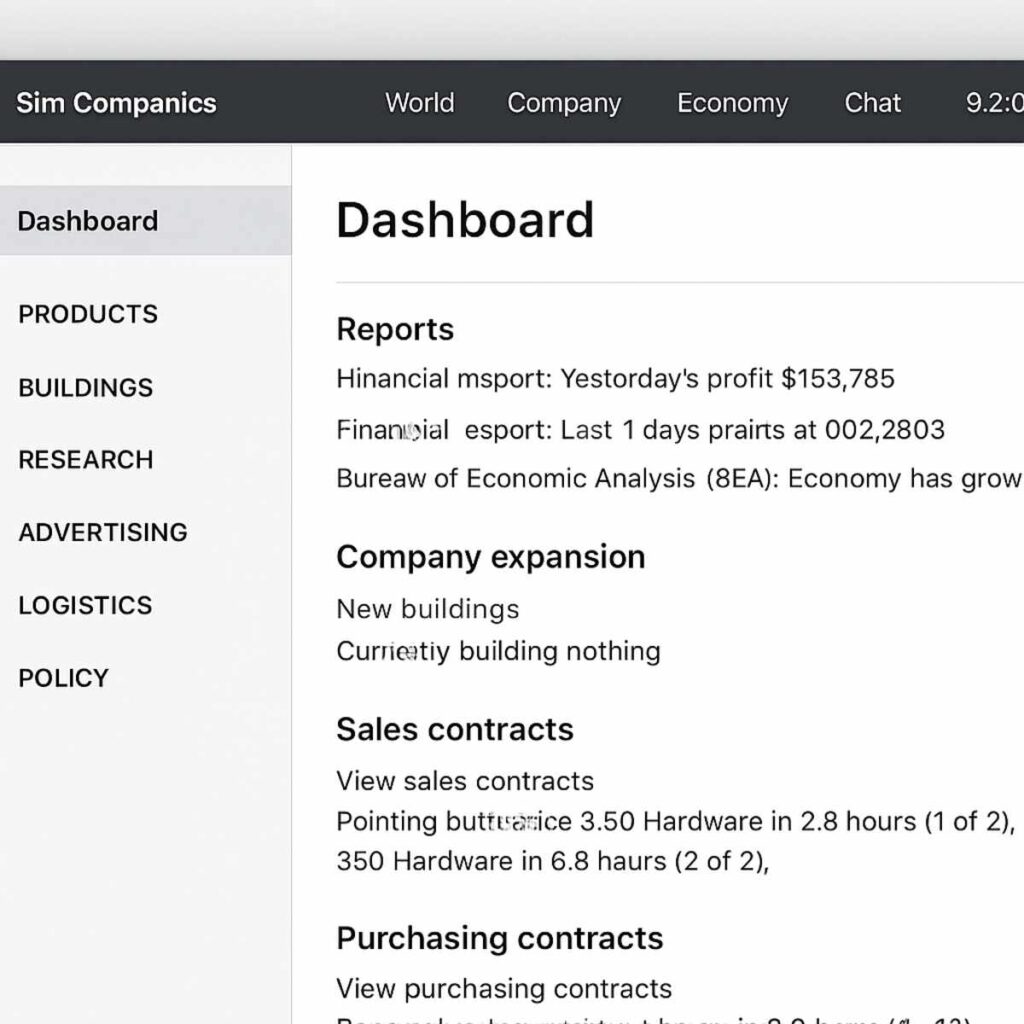
For those who want to dive in without any installation, Sim Companies is one of the best browser business simulators available. This means you don’t download anything; you play it on a website, just like you’d check your email. The interface is clean and text-based, focusing purely on the thrill of business decisions. It also has a famously helpful player community ready to answer questions. Your First Goal: Simply follow the tutorial and produce your first batch of apples to sell at the market. That’s it!
Games like Sim Companies run in your browser, offering deep gameplay without needing a powerful computer or complicated installation.
If you prefer a more visual and lighthearted experience, Good Pizza, Great Pizza is a perfect choice. Originally a hit mobile game, it’s now one of many idle management games for PC as well, perfect for playing in short, satisfying bursts. You run a small pizza parlor, dealing with quirky customers and their odd orders. The core loop is simple and instantly rewarding: take an order, make the pizza, and collect your cash. Your First Goal: Learn the basic pizza recipes and make it through your first business day without your cash dipping into the red.
For players who dream of something bigger but want to start safely, Virtonomics offers a unique solution. While the full game is a vast and complex simulation of global economics, it has a “Beginner Realm”—a separate, temporary world just for new players. Here, you can learn the fundamentals of supply, demand, and production without any pressure from veteran competitors. Your First Goal: Don’t even think about the global market. Just focus on the tutorial missions to open your first store and keep it stocked.
Ultimately, your first day as CEO isn’t about world domination; it’s about making your first sale. Whether you’re harvesting apples in a browser or serving a pepperoni pizza on your phone, that first taste of profit is what makes these games so addictive.
Multiplayer Tycoon Games: Building an Empire with Friends
Once you’re comfortable running your own operation, the “online” part of these games truly comes alive. This is where you move from being a solo shop owner to part of a living, breathing economy filled with other real people. Playing with others generally unfolds in two exciting ways: working together (cooperation) or vying for the top spot (competition). Many of the best games beautifully blend both.
Playing Together: Cooperation vs. Competition
Cooperation is all about teamwork. Instead of trying to do everything yourself, you can partner with friends to specialize. Think of it like running a restaurant: one friend could be the master chef in the kitchen, while another is the charming host managing the front of the house. In many multiplayer business management games, this means one player might focus on producing raw materials, like wood and ore, while their partner uses those materials to craft and sell high-end furniture. You work together, sharing resources and profits to build a shared empire faster than either of you could alone.
This approach opens up a whole new layer of planning. A great cooperative strategy for growing a virtual company might involve one player in Sim Companies focusing entirely on producing cheap electricity and water. Your partner, who now gets discounted power from you, can invest their money into building advanced factories to produce much more profitable electronics. By coordinating through contracts, you create your own private supply chain, giving both of your businesses a huge advantage.
Some games are built from the ground up for this kind of collaboration. In titles like OpenTTD, a fan-favorite that ranks among the best transport empire building games, you and your friends can join the same map to build a single, massive logistics network. Imagine the satisfaction of laying a track that connects to your friend’s sprawling harbor, watching their ships unload cargo that your trains then whisk across the continent. It turns business management into a massive, shared creative project.
But perhaps you have a more competitive streak. Instead of sharing the market, you want to dominate it. This is the heart of competition in tycoon games. Here, you and other players are rivals, all fighting for the same limited pool of customers, resources, and profits. It’s less about direct conflict and more about outsmarting and out-producing everyone else. Can you set your prices just right to steal customers from the shop across the street? Can you research a new technology first to get a critical edge?
In a game like Virtonomics, once you leave the safety of the beginner’s area, you’re thrust into a global marketplace where every other CEO is a real person. If you decide to open a chain of grocery stores, you’ll be directly competing with other players’ stores in the same city. Your success depends on your ability to offer better prices, maintain higher quality, and manage your advertising budget more effectively than they do. It’s a thrilling game of virtual chess played with balance sheets and marketing plans.
Other games make the competition even more direct. In a game like Airline Manager, players bid against each other for the most profitable flight routes between major cities. If you want to own the lucrative New York to London route, you’ll have to outbid other players who want it just as badly. This creates a dynamic world where the landscape is constantly shifting based on the collective decisions of thousands of players.
Ultimately, the most engaging online tycoon games don’t force you to choose one path. They allow you to cooperate with a small group of trusted allies while competing against the wider world. You might form a corporation with a few friends to pool your resources and knowledge, working as a team to climb the leaderboards and take on other powerful player-run corporations.
Top 3 Niche Tycoon Games for Your Inner Specialist
That’s the beauty of the modern tycoon world: it’s not just about building a generic company anymore. If you have a specific passion, there’s a good chance a game exists that lets you dive deep into it. These specialized games trade broad business management for a rich, focused experience in a single industry, allowing you to become an expert in everything from logistics to life-saving medicine.
A perfect example is the world of transportation, anchored by timeless classics like OpenTTD. This title is consistently ranked among the best transport empire building games for a reason: its goal is beautifully simple but endlessly deep. You don’t just build a “business”; you build a living network of trains, trucks, and ships. Your task is to connect a coal mine to a power plant or a forest to a sawmill, then design the most efficient route to deliver the goods. It’s like creating a massive, functioning model train set that powers an entire virtual world.
The real magic of these games comes from solving the logistical puzzle. As your network grows, you’ll face challenges like preventing train traffic jams, optimizing delivery schedules, and deciding where to expand next. The satisfaction doesn’t just come from making money; it comes from watching a perfectly synchronized system you designed run like clockwork. This kind of complex supply chain management gameplay feels less like running a spreadsheet and more like conducting an orchestra of industry.
If building physical networks isn’t your thing, perhaps you’d rather build digital ones. In a game like Software Inc., you step into the shoes of a tech startup CEO in the 1980s. Instead of managing cargo, you manage people and ideas. You’ll hire programmers, artists, and marketers to design and develop everything from simple word processors to blockbuster video games and entire operating systems. You have to keep your team happy, fix bugs, and race to get your product to market before your rivals beat you to it.
This creates a very different kind of challenge that makes it one of the more realistic business owner simulators available. Success isn’t just about having the most efficient production line; it’s about creativity, innovation, and managing the personalities on your team. You’ll feel the pressure of a looming deadline and the thrill of seeing your virtual software receive rave reviews. It’s a game about bringing an idea to life from a blank screen.
For an even more human-centered experience, games like Project Hospital put you in charge of building and running a medical center. You don’t just place buildings; you design every single room, from the reception desk to the operating theater. You hire doctors and nurses, equip them with the right tools, and then take on the ultimate challenge: diagnosing and treating patients. It adds a layer of purpose and care that you won’t find in many other business games.
Your First Hour: A Simple 3-Step Strategy for Any Tycoon Game
Starting a new tycoon game can feel like being handed the keys to a giant factory with no instruction manual. With dozens of menus and options, it’s easy to feel overwhelmed. The good news is, there’s a simple, universal strategy that cuts right through the noise.
If you’re wondering how to get started with management games, just focus on this plan for your first hour:
- 1. Finish the Tutorial. It might be tempting to skip, but it will teach you the essential buttons and save you a headache later.
- 2. Find One Simple Thing to Make and Sell. Ignore everything else on the screen. Focus on producing just one basic item, like bread, T-shirts, or iron ore.
- 3. Don’t Expand Until You’re Profitable. Don’t buy a new building or hire more staff until Step 2 is consistently making you money.
That second step is your golden ticket. Whether it’s baking digital bread or selling virtual coffee, your only goal is to create a stable, profitable cycle. You need to be making more money than you spend before you try to do ten things at once. This simple focus is the foundation of any successful empire, real or virtual.
The most common beginner mistake is expanding too fast. Buying that shiny new machine before you can afford it is a quick way to go bankrupt! By mastering one profitable product first, you build a safety net of cash. In a way, this answers the question, are business sim games good for learning? Absolutely—they teach the patience and focus needed to succeed.
Your Virtual Empire Awaits
The world of online tycoon games is no longer a complex puzzle. You now understand the core secret behind the best business simulators: they are creative sandboxes waiting for your ideas. What once may have seemed like a niche for hardcore gamers is now a genre you can confidently explore, armed with the knowledge of how to start smart and find the fun in building from the ground up.
The only question left is, what will you create? Will you build a transportation network that spans the globe, or a cozy restaurant that becomes the talk of the town? The joy comes not just from watching profits grow, but from solving problems and seeing your unique vision come to life. The tools are there; all that’s missing is you.
It’s time to move from reader to founder. Pick one of the beginner-friendly games from our list and follow the simple starting strategy. Your journey begins with that first, satisfying click. See what you can create.